
If there is one place that perfectly represents the rich Mughlai culinary heritage of Delhi, it is Karim’s. Located in the narrow lanes near Jama Masjid, this iconic restaurant has been serving authentic Mughlai cuisine since 1913.
For more than a century, Karim’s has remained a favourite destination for food lovers, history enthusiasts, and tourists who want to experience the flavours once enjoyed in the royal kitchens of the Mughal emperors.
From juicy kebabs to rich curries, Karim’s is not just a restaurant — it is a living culinary heritage of Delhi.
The Fascinating History of Karim’s
The story of Karim starts with the fall of the Mughal Empire in the late 19th century. The founder Haji Karimuddin was a descendant of the chefs who cooked in the royal kitchens of the Mughal emperors.
After the fall of the Mughal dynasty and the upheavals following the Indian Rebellion of 1857, many royal cooks lost their positions.
Years later, Karimuddin decided to revive the lost Mughlai culinary traditions by opening a small food stall near Jama Masjid in 1913.
His goal was simple yet powerful: “Serve royal Mughlai food to the common people.”
What started as a humble eatery soon became one of the most famous restaurants in Delhi.
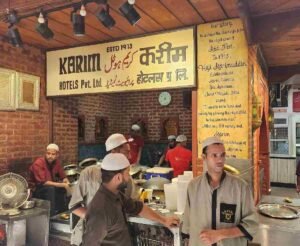
Inside Karim’s Delhi – the legendary Mughlai restaurant serving authentic royal recipes since 1913.
Location and Ambience
It is located in Old Delhi, near Jama Masjid. The restaurant’s setting, which is surrounded by vibrant markets, street food vendors, and centuries-old buildings, enhances the experience.
Inside the restaurant, the ambience reflects a blend of tradition and nostalgia:
- Classic Mughlai-style interiors
- Simple wooden seating
- Old photographs and heritage décor
- The aroma of freshly cooked kebabs and curries
While it may not be luxurious, Karim’s charm lies in its authenticity and historical significance.
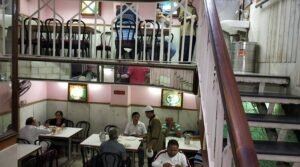
Dining experience inside Karim’s Delhi, one of the most famous heritage restaurants in Old Delhi.
Famous Dishes at Karim’s
Karim’s menu celebrates traditional Mughlai cooking techniques that have been passed down through generations.
1. Mutton Korma
One of the most iconic dishes at Karim’s, Mutton Korma is a rich curry cooked with aromatic spices, yogurt, and slow-cooked tender mutton. It perfectly reflects the royal Mughlai flavour profile.
2. Mutton Burra
Delicious lamb ribs marinated in spices and expertly grilled are the main ingredient in this recipe. The smoky flavour and tender meat make it a must-try item.
3. Chicken Jahangiri
Named after Mughal emperor Jahangir, this dish combines creamy gravy with delicately spiced chicken.
4. Seekh Kebabs
Karim’s seekh kebabs are legendary. Juicy and tasty kebabs are made by grilling minced meat combined with seasonings over charcoal.
5. Nihari
Traditionally eaten as a breakfast dish, Nihari is a slow-cooked stew made with tender meat and aromatic spices.
6. Tandoori Roti & Rumali Roti
No Mughlai meal is complete without freshly baked rotis served straight from the tandoor.
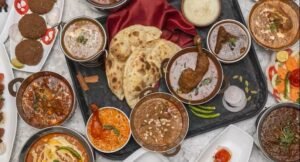
Authentic Mughlai feast at Karim’s Delhi featuring kebabs, naan, curries, and classic Old Delhi flavours.
Why Karim’s is So Famous
Karim’s popularity is not just about food — it is about legacy and authenticity.
Here are a few reasons why it remains legendary:
- Over 100 Years of History
Few restaurants in India can claim such a long and uninterrupted culinary legacy. - Authentic Mughlai Recipes
Many recipes used at Karim’s are believed to have originated in the Mughal royal kitchens. - Prime Heritage Location
Being located near Jama Masjid gives visitors a cultural and historical experience. - Celebrity and Tourist Favourite
Over the decades, Karim’s has been visited by politicians, celebrities, and international travellers. - Expansion Across India
While the original outlet remains the most popular, Karim’s now has several branches across India and internationally.
Karim’s Today
Today, Karim’s is not just a single restaurant but a well-recognized culinary brand. Despite expansion, the original branch near Jama Masjid still attracts thousands of visitors every day.
The restaurant continues to maintain its traditional cooking style, ensuring that the taste remains consistent with its historical roots.
For anyone visiting Delhi, dining at Karim’s is considered a must-have cultural and gastronomic experience.
Best Time to Visit Karim’s
Karim’s is open throughout the day, but the experience varies depending on the time.
Lunch Time:
Perfect for enjoying freshly cooked curries and kebabs.
Dinner Time:
The restaurant fills with both residents and tourists, creating a bustling scene.
Early Morning:
Ideal for tasting traditional dishes like Nihari.
Tips for First-Time Visitors
- Expect crowds, especially during weekends.
- Try the Mutton Korma and Seekh Kebabs first.
- Pair dishes with Rumali Roti or Tandoori Roti.
- Carry cash or digital payment options as it gets busy quickly.
- Visit nearby attractions like Jama Masjid and Chandni Chowk after your meal.
LOCATION:
FAQs About Karim’s – Delhi
1. Where is Karim’s located in Delhi?
Karim’s is situated close to Jama Masjid in Old Delhi, one of the easiest heritage cuisine sites in the city.
2. When was Karim’s restaurant established?
Karim’s was established in 1913 by Haji Karimuddin.
3. What are the must-try dishes at Karim’s?
Some popular dishes include:
- Mutton Korma
- Seekh Kebabs
- Mutton Burra
- Chicken Jahangiri
- Nihari
4. Is Karim’s suitable for tourists?
Yes, Karim’s is one of the most popular food destinations for tourists visiting Delhi, especially those exploring Old Delhi.
5. Does Karim’s have multiple branches?
Yes, Karim’s has expanded and now operates multiple branches across India and abroad, though the original branch near Jama Masjid remains the most famous.
Conclusion
More than a century old, Karim’s – Delhi stands as a timeless symbol of Mughlai culinary excellence. From its humble beginnings in 1913 to becoming an internationally recognized restaurant brand, Karim’s has preserved the rich flavours of Mughal cuisine for generations.
Whether you are a history lover, a foodie, or a traveller exploring Delhi, a visit to Karim’s promises a royal dining experience that connects the past with the present.
Pingback: Moti Mahal Delhi (1947) – Origin of Butter Chicken & Tandoori
Pingback: Amrik Sukhdev Dhaba Murthal : Famous Highway Dhaba